

Starting date:
13+ OF THE HOTTEST ALTERNATIVE SOCIAL MEDIA PLATFORMS
Marketers know that the social media realm moves fast - especially with the integration of artificial intelligence into platforms to rank content, personalize recommendations, automate processes, and power chatbots.
The social networking market is projected to surpass 6 billion people by 2028, and be worth $183 billion by 2027, according to Statista. So, with social media evolving rapidly, marketers are always looking for new platforms to diversify their strategies.
Users are also becoming more conscious of data privacy on social media and how their information is being used. From privacy-focused networks to niche hobby platforms, new and emerging social channels offer users alternative ways to stay connected.
Let’s explore the hottest alternative social platforms you should consider.
Alternatives to X (Twitter)
Platforms like Threads, Bluesky, Mastodon, and True are direct competitors of X, each offering unique features and addressing gaps left by the changes to X under Elon Musk’s ownership.
How to Build a Social Media Strategy
Create a comprehensive social media strategy to drive engagement and generate quality leads and become a free DMI member at the same time!
- Set SMART objectives
- Identify and engage your target audience
- Plan social media content
- Track and measure performance
1) Threads
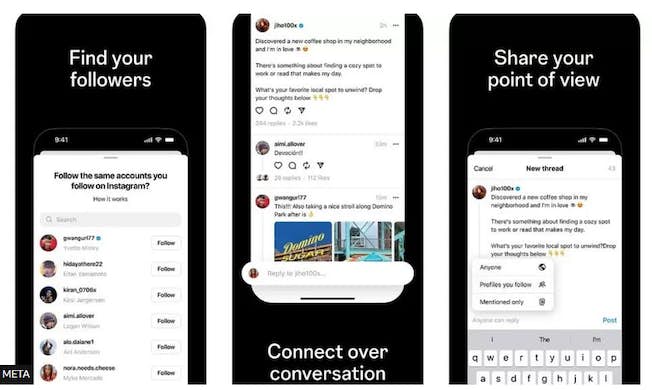
Positioned as “Instagram’s text-based conversation app,” Threads is seamlessly integrated with Instagram in the Meta universe, allowing users to sign up with their existing Instagram credentials and maintain a unified presence across platforms.
Threads had a record-breaking start and quickly amassed 275 million monthly active users by November 2024. This figure is now 400 million as of Q3 2025, reported Backlinko.
By leveraging Instagram’s massive following, Threads is capturing the attention of Instagram users, creators, and public figures looking for a platform to share their content without the unpredictability often seen on other networks.
It is popular among those who want a consistent place to engage their followers without the controversies associated with other platforms.
Marketing opportunities
Threads has now introduced advertising in image, video and carousel formats. This creates an opportunity for marketers to connect with the Threads community, especially as Meta reports that 3 out of 4 users follow at least one business which indicates a receptiveness to brand content.
2) BlueSky
Bluesky was created by X co-founder Jack Dorsey. Launched as a text-based microblogging platform, Bluesky brings back the simplicity and user control of X’s early days, but with a modern, community-focused twist.
Bluesky gives users full transparency in its development and updates, all while being free from corporate control. This approach has drawn in a fast-growing user base, which has reached 40 million as of November 2025.
Bluesky has attracted influencers, journalists, and celebs after the mass “X exodus” post US-election, especially since The Guardian announced it was leaving X.
The platform has attracted users who value ad-free spaces, content control, and niche communities.
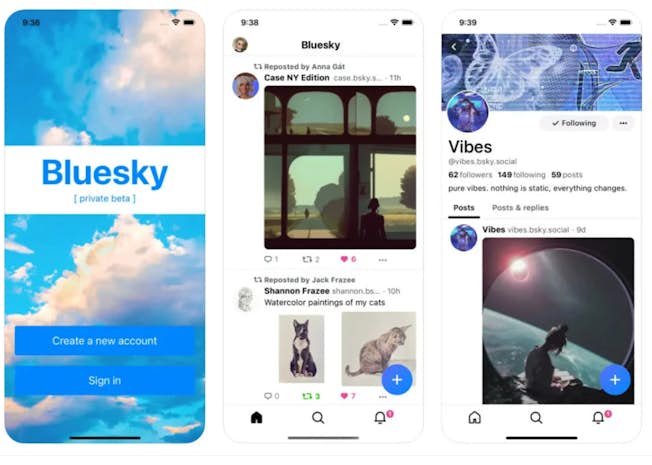
Bluesky’s interface mirrors the classic X layout, allowing users to create 256-character posts, add photos, reply, share, and engage just as they would on X. However, Bluesky has gone further by offering customizable feeds, powerful content filters, and algorithmic choice.
The New York Times uses Bluesky to post news stories but also for promotion and engagement.
Marketing opportunities: While Bluesky’s CEO Jay Graber hasn’t completely ruled out ads, the platform is seeking revenue streams including paid subscriptions and custom algorithms. For marketers, Bluesky provides an opportunity to reach niche audiences, establish thought leadership, and foster genuine connections within targeted communities. Those looking to leverage word of mouth marketing should consider using hashtags that form niche-driven discovery loops or working with micro-influencers.
3) Mastodon
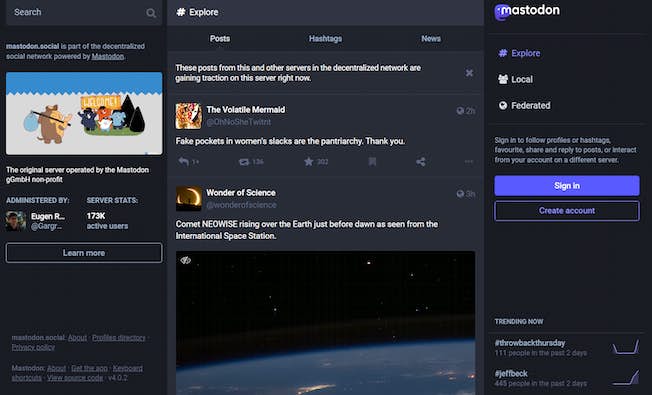
Mastodon is built around a network of independent servers, each focusing on specific themes, topics, or interests. This structure lets users choose a server that aligns with their interests, creating a unique social experience centered around community.
Essentially, instead of one large platform, Mastodon is a collection of individual servers, giving users more control over their social experience and data privacy. The network is also making moves to transfer to nonprofit organization to ensure that the app cannot be owned or controlled by a single individual.
Mastodon’s user base is largely made up of privacy-conscious individuals who value decentralized networks. Many have turned to Mastodon as an alternative to X, seeking a more secure, ad-free space to engage with like-minded communities. According to Mastodon analytics, the platform has 10 million members, but no public data on active users.
Marketing opportunities: Although Mastodon doesn’t allow ads, brands still have opportunities to connect with audiences. Sponsorships, affiliate marketing, and user-generated content can be used to foster authentic engagement within communities.
Alternatives to Facebook
For users stepping away from mainstream social networks, Nextdoor and MeWe offer a closer, community-driven experience. These apps support genuine, localized engagement and appeal to brands looking to connect at a grassroots level.
4) Nextdoor
Nextdoor is a popular alternative social media app, currently available in 11 countries, including the US, Canada, UK, Germany and Australia.
Think of it as a close-knit Facebook group for homeowner associations, schools, and local communities. Here, you can engage socially without the overwhelming scale of larger social media networks.
To sign up for Nextdoor, you provide your name and address verification. Legitimate details are needed so the platform can connect you with the people in your community.
Marketing opportunities: Brands like Costa Coffee and Thesis use Nextdoor to connect with local audiences, making it ideal for local businesses and service providers aiming to establish trust within specific communities in key locations. The app has also introduced AI-powered ad optimizations, new video formats, and the piloting of new locally personalized advertisements to boost its ad features for marketers.
"Advertisers don't just want scale - they want intent and impact. Our latest innovations are reshaping the way brands connect with over 100 million neighbors by making every impression more relevant and every campaign more efficient," said Michael Kiernan, Chief Revenue Officer at Nextdoor. "From weather-triggered messaging to AI-driven optimization, we're giving marketers the precision they need to turn hyperlocal advertising into tangible business results."
Instant messaging apps
Instant messaging apps are evolving, offering not just secure communications but a way to build private, engaged communities. Telegram is one of the most popular choices, standing out for its privacy features and reach.
5) Telegram
Since its launch in 2013, Telegram has positioned itself as a top messaging app for privacy-conscious users. Founded by Nikolai and Pavel Durov, who also created VK, Telegram was designed as an alternative to WhatsApp.
But the rise of the app has not been without challenges. Telegram has come under fire for its handling of user data and illegal activity on its platform. In fact, its CEO, Pavel Durov, was arrested in France over allegations of enabling criminal activity on the platform. He has been accused of censorship, allegedly cooperating with the German government to remove hate speech channels.
Despite this, Telegram attracts a tech-savvy, privacy-focused audience with more than 1 billion active users. Users value its flexible features and high level of control over personal data. As the app continues to grow, it’s become a go-to channel for people seeking a secure, reliable communication platform.
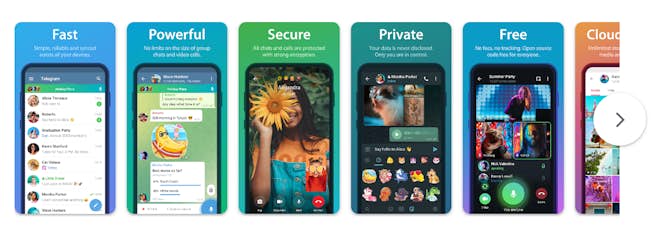
Telegram offers end-to-end encryption for chats and calls, and additional features like self-destructing messages and cloud-based storage, meaning users can access their chat history on any device.
Marketing opportunities: Telegram Business, a facet of the application, allows marketers and business owners to access features such as opening hours, location, quick replies, automated messages, custom start pages, and chatbot support. You can also use Telegram Ads to send sponsored messages in channels with 1,000+ subscribers, and leverage AI-powered bots to respond in real time, similar to how ChatGPT replies as it types to make interactions faster, smoother, and more conversational.
Hobby apps
In recent years, hobby apps have become the go-to space for people seeking to connect with others who share their interests, away from the noise of major social platforms.
While X and other giants were once seen as “digital town squares,” many users are now embracing niche apps that focus on specific activities they love.
Hobby apps such as Strava and Letterboxd offer enthusiasts more than just a digital feed – they create communities built around shared passions.
6) Letterboxd
For film fanatics, Letterboxd offers an engaging space to review and discuss films, find recommendations, and connect with fellow cinephiles.
Founded in 2011, Letterboxd surged during the pandemic and now boasts more than 15 million users, reports Cultured Magazine. The app is popular among film lovers and industry insiders, including directors like Martin Scorsese, creating a lively, film-focused community.
Letterboxd’s growth has attracted attention from studios and distributors, who now use the app to host screenings and promote releases. Marketers can engage directly with an audience of film lovers through targeted promotions, making Letterboxd an ideal platform for brands in entertainment.
Marketing opportunities: Marketers can use Letterboxd for targeted advertising, social listening, and creating brand communities around film. The platform offers ad placements, email campaigns, and allows brands to target users based on their film taste and location.
7) Strava
Strava launched in 2009 as a niche website for cyclists to log mileage. Today, the app serves more than 150 million athletes across 185 countries. Strava has tapped into the need for athletes to connect, adding messaging and group chat features to encourage communication within its thriving user base.
Strava partners with a variety of brands, including Chipotle, Lululemon, and Brooks, to create branded workouts and product discounts for participants. For brands, the appeal of Strava lies in its engaged, fitness-oriented community, where companies can promote their products through partnerships, sponsorships, and athlete clubs.
Mexican restaurant chain Chipotle used Strava to engage consumers who valued wellness and admitted to eating at the chain after a run. On the app, they launched Chipotle segments and various challenges with the opportunity to win free ‘Lifestyle Bowls’.
The campaign resulted in 700 million on-and-off platform impressions, and a 20% increase in Lifestyle Bowl sales. Chipotle and Strava challenge - Instagram post
Marketing opportunities: Strava helps brands connect with audiences through Clubs, Challenges, and partnerships. A Club provides a space to share content with users and grow brand awareness, while setting up a Challenge will let you target a cohort of users to get active in return for a reward. Partnerships, on the other hand, allow brands to work with athletes and content creators to engage and promote.
As more users gravitate toward hobby apps, brands looking to reach specific communities can benefit from marketing strategies that prioritize passion and community connection.
Image-based apps
Image-based apps rely on eye-catching and relevant images to attract, influence, and engage an audience. Platforms like BeReal, Lemon8, and Locket focus on photos to build a community and engage like-minded people.
8) BeReal
BeReal is a social media app that prompts users to share unfiltered, daily moments by taking a photo within two minutes of a random notification. Using both the front and back cameras, it captures a dual perspective, with no filters or edits allowed. Users must upload their own post to view friends' content, ensuring mutual participation and authenticity.
BeReal has 40 million active monthly users of which 85% of them are GenZ. Despite fluctuations, BeReal has established itself as a prominent platform for real-time, authentic sharing.
The ‘RealPeople’ and ‘RealBrands’ features allow users to see content from celebrities and brands, while RealChat adds direct messaging between friends in the app, and tagging allows people to tag friends in posts.
Marketing opportunities: In the US, the platform has launched targeted, in-feed and high-impact takeover ads designed to mirror the user experience. Its ‘Dual Take’ posts will capture front and back photos simultaneously to allow advertisers to craft campaigns that feel personal, spontaneous, and true to life, according to the platform.
Brands can succeed on BeReal by embracing unfiltered, authentic content that resonates with the platform’s ethos. Posting daily, fostering community engagement, and offering exclusive deals or contests can help attract and retain followers.
9) Lemon8
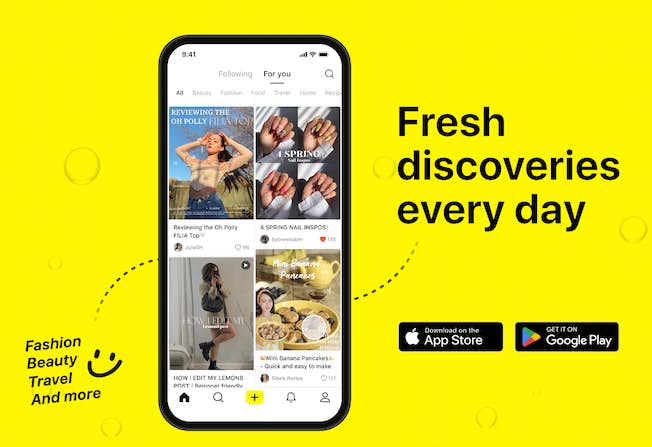
TikTok creators launched Lemon8 in 2020, quickly gaining attention as a visually-driven blend of Instagram and Pinterest. Emphasizing photos over videos, Lemon8’s board-style layout provides an ideal platform for content creation and curation.
Lemon8 splits its content into seven lifestyle-focused tabs – Fashion, Beauty, Food, Wellness, Travel, Home, and All – so users can easily explore the topics that interest them. Unlike TikTok’s video-heavy feed, Lemon8 leans into images and longer captions, giving users more space for detailed instructions, product recommendations, or even recipes.
The app’s unique approach is drawing comparisons to traditional social platforms, but with a twist: it features many influencer ads and product recommendations. This mix of sponsored and organic content has blurred lines between what’s paid and what’s not, yet it’s proving popular with audiences who like this editorial, lifestyle-heavy vibe.
TikTok recently announced that users can log in to both TikTok and Lemon8 using a single account, making cross-sharing between the two platforms seamless. With this integration, TikTok creators can expand their reach across both apps, effectively giving users more ways to interact with their favorite creators and follow trending products across multiple channels.
Marketing opportunities: Since its integration with TikTok, you can generate ads which appear in the ‘For You’ feed, search results page, and video feed. In addition, Lemon8 ‘Brand Auction’ helps you reach unique Lemon8 communities through TikTok ads Manager, though this is currently only available in three countries).
10) Locket
Locket is a photo app that lets users share real-time images directly to the home screens of their closest friends and family. Originally designed by Matt Moss as a sweet side project for his girlfriend, Locket's appeal spread so quickly that Moss released it on the App Store.
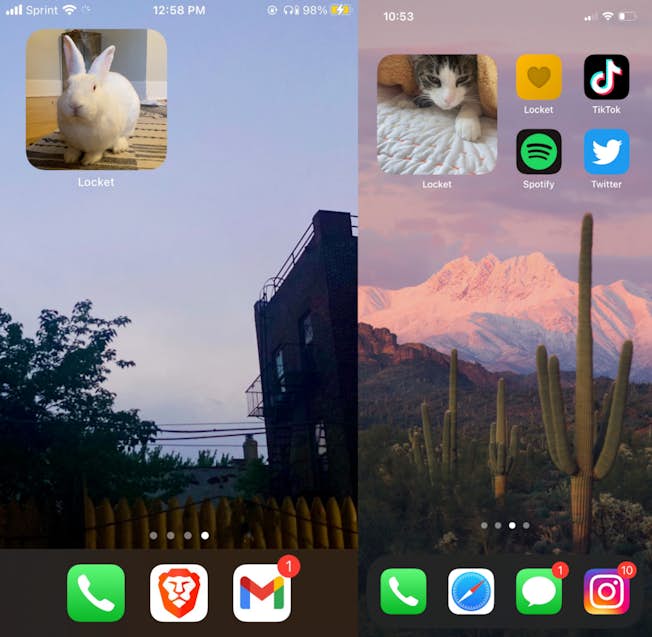
Locket’s concept is straightforward: it allows users to invite contacts, who can then add a widget to their iPhone’s home screen. This widget displays live photos as friends and family upload them throughout the day, creating a real-time stream of personal moments without the noise of public feeds. It’s a completely private experience, unlike traditional social media platforms, allowing users to stay close to those who matter most.
A new ‘Rollcall’ feature, which prompts users to share a collection of their favorite photos from the past week with their closest friends, has proved popular amongst the Alpha generation. In fact, TechCrunch reports that over 25% of the app’s active users are now posting a Rollcall every week.
Locket strongly resonates with young users and close-knit friend groups with its simplicity and privacy, allowing users to easily share candid moments without an audience.
Marketing opportunities: Brands can advertise on Locket through the ‘First Glance Advertising’ feature by partnering with users to display ads on lock screens for a payment or user reward. The aim is to target people with high-quality ads as soon as they unlock their phones to capture attention before any distractions. Marketers can also use targeted content to attract and engage a Locket audience.
Audio Apps
In the realm of audio-focused platforms, Discord has transformed from a gamers’ chat space to a versatile community tool. It allows marketers to host interactive events, support communities, and reach audiences in a way that feels personal and direct.
11) Discord
Discord is a voice, video, and text chat app that's used to talk and hang out with communities and friends.
The app uses servers that are private, invite-only spaces for groups of friends and communities to spend time together. There are also larger, more open communities, centered around specific topics such as popular games like Minecraft and Fortnite, which is no doubt where it earned its nickname of “Slack for gamers”. It can also be integrated with other popular platforms like Zapier, YouTube and Twitch.
Launched in 2015 by Jason Citron and Stan Vishnevskiy, the aim of the app is “give people the power to create space to find belonging in their lives and build genuine relationships with friends and communities close to home or around the world.”
The app is estimated by Business of Apps to have over 200 million monthly active users and 563 million registered users.
Marketing opportunities: Discord is perfect for brands looking to promote events and user-generated content. AI-powered bots and apps can help you automate engagement and moderation as your community grows to provide customer support. The key is to create a Discord server community based on a topic that aligns with your brand.
These spaces come with their own user roles, avatars, and access to video and voice chat. Visuals are important, so make sure you use stickers, GIFs and images. There’s also a Partner Program you can take advantage of, and you can use live events for promotion.
Membership Apps
12) Patreon
Patreon is a monetization platform used by videographers, artists, writers, podcasters, musicians, and other creators who post regularly online. It allows artists to receive funding directly from their fans, or patrons, on a recurring basis or per work of art.
It allows creators to run a subscription service for their content. So, instead of setting up their own website and payment platform, creators can launch a personal Patreon page.
Paying subscribers on the app are called patrons, and each patron pays a fee for exclusive content from creators. Patreon reports attracting 100+ million monthly website visits, and more than 200,000 creators with $3.5 billion paid out to creators, according to Influencer Marketing Hub.
Marketing opportunities: Patreon is primarily built for creators, rather than brands, to make money. However, brands can build a community by offering exclusive content, tiered memberships, and also sell products through their shop feature.
13) Vero
Vero has made a name for itself as a refreshing alternative to the ad-heavy world of mainstream social media. Founded by Ayman Hariri in 2015, Vero’s approach is simple but distinct: no ads, no data mining, and no algorithms dictating your feed.
It’s a platform designed for users who want a clean, authentic experience, free from the noise of traditional social networks. Vero stands out for its organic user experience, putting full feed control into the hands of its users. This approach has made Vero a favorite among creators like cosplayers, tattoo artists, photographers, musicians, filmmakers, and makeup artists.
Vero’s user base may be smaller compared to social giants, but this is part of its appeal. With an estimated 6.5 million active users, Vero has become a niche hub for passionate communities rather than general social interaction.
Marketing opportunities: While Vero is ad-free, there are still plenty of opportunities for brands and creators. The app allows users to share affiliate links and direct users to an in-app sales portal where products or services can be purchased. Marketers can also use the app to share a range of content like photos, videos, books, and music to showcase their brand's personality and by engaging directly with followers.
Conclusion
So there you have it, 13 great social apps that you may not have come across or used as part of your social media activities. Before you start using a new platform, make sure to review your social media strategy. This will help you decide whether a social app aligns with your audience and objectives. Remember, it's always best to test a social media platform personally before launching a brand presence. And don’t forget to check out each platform’s AI capabilities to get the most out of any features or add-ons.
Drive awareness, leads & revenue with social media
With so many eyes on social networks, it’s a great place to attract, engage and influence customers. DMI’s industry aligned and certified Social Media Marketing course will teach you advanced social media expertise and AI-driven strategies for research, content creation, and campaign optimization. Sign up today to benefit from hands-on learning, expert-led walkthroughs, platform simulations, and access to DMI’s professional resources.





We will support the journey!

VIETNAMESE MARKETERS TO GAIN
THE DMI’S CDMA CERTIFIED & JOIN THE
GLOBAL DIGITAL MARKETERS COMMUNITY


© 2026 PACE Institute of Management. All rights reserved.